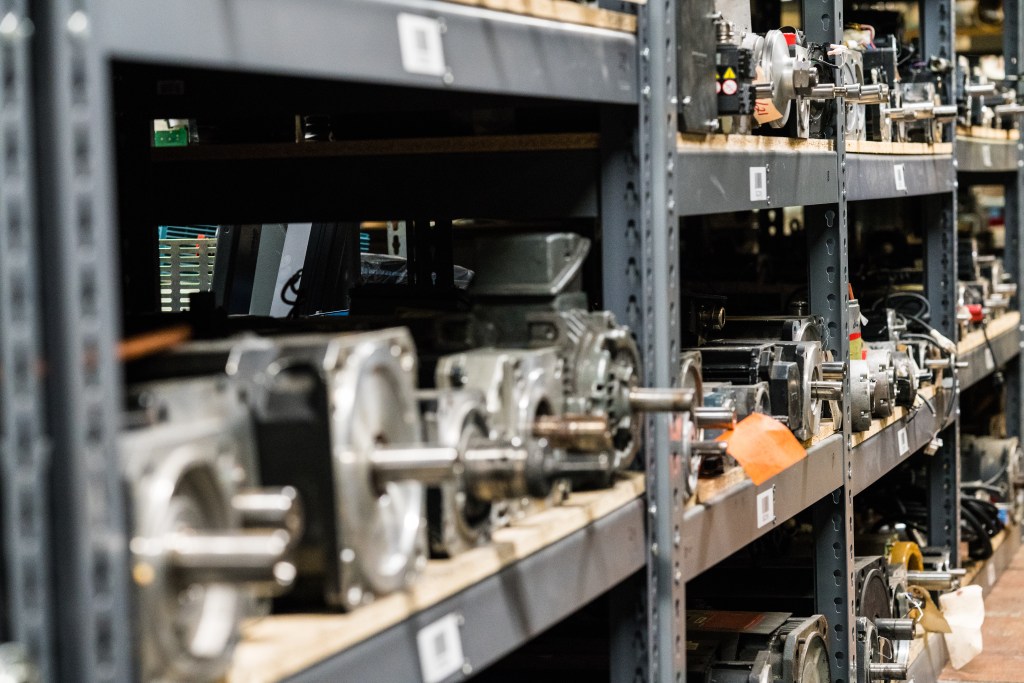
Storing industrial equipment in the right environment is essential to preventing problems before installation. Here are some tips to keep your components protected, your stockroom organized, and your operations running without costly surprises.
As industrial-strength as equipment can be, it’s not invincible. Motors, valves, and especially electronics are susceptible to deterioration when exposed to the wrong environmental conditions. Humidity can lead to “short circuits, rust, and even mold or fungus growth,” and “moisture can also speed up the breakdown of materials and create conductive paths that cause electrical issues” (Law, 2025). If the environment’s humidity is too low, the build-up of static electricity can harm the electrical points of the item. With equipment naturally subject to immense stress in operations, high heat can cause components to reach soaring temperatures and corrode materials inside the machine.
Having an organized stockroom allows parts to be stored safely, located quickly, and accessed without disruption. One way to structure your stockroom is to arrange items based on how often they’re used, usually at waist height or lower, so they’re easiest to grab. As teachers do in classrooms, or workers do in the office, labeling is just as crucial in a stockroom so you can quickly identify and get hold of the items you’re looking for. These labels should be in large, easy-to-read font in bold coloring so there’s no confusion. Storage spaces should have ample room to move around, allowing forklifts and personnel to navigate the room easily and safely.
Inventory management can sometimes be time-consuming and tedious for plants, but it’s necessary to ensure parts are stored, maintained, and appropriately rotated. With advancements in data analysis, tracking parts, their stock levels, and locations has never been easier, allowing managers to have complete control over when to order new equipment or be aware if inventory trends seem unstable. The automation of data-analysis systems enables operators to receive real-time usage data and will likely be installed in plants everywhere soon. However, even if you’re still using the old-fashioned books or spreadsheets, the most important thing is consistency! Accurate records will always save you when downtime hits.
These tips aren’t just busy work: they’re protection against costly downtime. By reducing the risks of equipment damage, misplacement, or running out of critical parts, you’re not only extending the life of your machines but also saving your plant from unnecessary repair expenses and lost production.
 Industrial Repair Service Blog
Leave a comment